
1. Introduction
This document is intended as guidance to help state environmental and health officials address biological contaminants of emerging concern (BioCEC). It builds upon the Contaminants of Emerging Concern (CEC) Framework that was published on the Interstate Technology and Regulatory Council (ITRC) website in December 2023 and is meant to provide guidance for states to identify and evaluate the broad range of contaminants and pathogens covered by the term BioCEC. BioCEC are diverse, and the risks they pose are varied; therefore, it is important to note that this guidance is not comprehensive and will not identify specific risks. This guidance can, however, aid entities as they assess the risk for their unique circumstances. The scope of this guidance is driven in part by the ITRC team’s capacity and the expertise of the team members/volunteers.
ITRC’s earlier Contaminants of Emerging Concern (CEC) Framework was meant to inform environmental regulatory agencies and other stakeholders about examples of existing CEC monitoring programs, point to key variables to consider when evaluating potential toxicity and exposure, help communicate real and perceived risk from CEC to the public, and understand how laboratory analytical methods can be used in the identification process. For this guidance, the CEC team adopted the following definition of a CEC:
ITRC CEC Definition: CEC are substances and microorganisms including physical, chemical, biological, or radiological materials known or anticipated in the environment, that may pose newly identified risks to human health or the environment.
BioCEC is included in the ITRC CEC definition, but the biological element is primarily addressed in the Analytical Methods Factsheet on a general basis. BioCEC are addressed more directly through this separate effort and guidance. For this guidance, the BioCEC team adopted the following definition for a BioCEC:
ITRC BioCEC Definition: A microbial pathogenic agent that may pose newly identified risks to humans through the environment and is found in a vector, water, soil, waste, or air.
The traditional definition of the environment includes soil, water, and air, also referred to as environmental media, which can be further subcategorized based upon characteristics such as use and location. The definition of an environment in a BioCEC context can be more expansive, depending upon the scenario. Vectors, waste, the built environment, and biota can be treated as sources, environmental media, mechanisms of environmental transmission, or any combination of these categories. See Defining the Environment in the Conceptual Exposure Model section for more information about defining the environment.
The primary audience for this BioCEC guidance is environmental and health professionals at state agencies who are tasked with making informed and timely decisions regarding BioCEC. The content is intended to be useful to environmental consultants and parties responsible for implementing BioCEC programs and interfacing with regulatory agencies regarding BioCEC. It can be useful for federal agencies, industrial representatives, tribal organizations, and other stakeholders who need to manage BioCEC. The subject matter audience for this guidance may differ from the audience for ITRC’s first CEC guidance, which focused on chemical CEC and was largely within the scope of environmental professionals.
2. Background
There is no denying that microorganisms have provided modern society with significant benefits in industrial, biotechnological, and agricultural settings. One of the major challenges associated with microbiology and public health is managing and reducing the risk associated with the transmission of harmful microorganisms, known as pathogens, and their resulting infectious diseases ( Haas et al. 2014 [78R697XZ] Haas, Charles N., Joan B. Rose, and Charles P. Gerba. 2014. “Quantitative Microbial Risk Assessment, 2nd Edition | Wiley.” Wiley.Com. https://www.wiley.com/en-us/Quantitative+Microbial+Risk+Assessment%2C+2nd+Edition-p-9781118910030. ). Microorganisms generally include all small biological entities that cannot be seen with the naked eye (e.g., viruses, bacteria, fungi, archaea, protozoa, algae). They can range in size from 20 nm to 300 µm. They exhibit complex organizational structures that allow them to reproduce using DNA and RNA. Viruses need a host cell to reproduce ( Mara and Horan 2003 [RBY9THLW] Mara, Duncan, and Nigel Horan, eds. 2003. Handbook of Water and Wastewater Microbiology. Academic Press. https://doi.org/10.1016/B978-0-12-470100-7.50047-9. ).
An infectious disease is an illness caused by the transmission of a pathogen from an infected host to a susceptible host either directly (e.g., person to person) or indirectly (by insects or other animals, or through air, water, food, waste, or soil). The term communicable disease usually refers to transmission from person to person or from animal to person (e.g., body fluids, droplets). While all communicable diseases are infectious, not all infectious diseases are communicable (e.g., tetanus is an infectious but not communicable disease). In resource-limited settings, communicable diseases remain a significant cause of mortality and morbidity in all age groups; in high-resource settings, infections associated with the respiratory tract are the most common diseases to impact susceptible populations.
Although pathogenic agents can cause harm to non-human receptors, the scope for this guidance is limited to addressing harm to humans. This guidance focuses mainly on microbial pathogens in environmental media (e.g., surface water, groundwater, wastewater, soil, waste, and air) that can harm humans. For the most part, this guidance does not focus on transmission from human to human (i.e., anthroponotic), animal to human (i.e., zoonotic), or human to animal (i.e., reverse zoonotic), except for transmission from animal waste and vector transmission between animals and humans.
BioCEC may pose newly identified risks to human health or the environment; hence, they could represent an emerging concern. There may also be cases where BioCEC could instead be reemerging. Climate change and anthropogenic impacts on environmental systems create niches for pathogens to survive. Climate change and thawing/melting environments may result in the re-release of organisms that have not evolved with current ecosystems and environmental conditions. Microbes liberated from melting permafrost could be an example of a BioCEC that poses an emerging concern. Warming temperatures may also lead to the migration of invasive species into areas that were previously not as hospitable. It is not well understood how increasing air temperatures, surface water temperatures, precipitation, and flooding might create new environments or more favorable conditions for pathogens to survive. An example of such potential effects of a changing climate is described in Case Study: Effects of Hurricane Helene on Western North Carolina — Climatic Events and Implications for Biological Contaminants in Drinking Water of this Introduction, which discusses the impact of Hurricane Helene on the mountains of North Carolina in September of 2024. Additionally, there may be cases where neither the contaminants nor the pathogens are emerging, but awareness of the hazards posed or the fate and transport mechanisms of BioCEC are increasing. For example, antibiotic-resistant bacteria and genes are on the rise in aquatic ecosystems ( Water Environment Federation 2023 [55UCRPDJ] Water Environment Federation. 2023. Antimicrobial Resistance Information for Water Professionals. May 8. https://www.accesswater.org/publications/-10092030/antimicrobial-resistance-information-for-water-professionals. Garner et al. 2021 [X3LPJ5HJ] Garner, Emily, Marisa Organiscak, Lucien Dieter, et al. 2021. “Towards Risk Assessment for Antibiotic Resistant Pathogens in Recycled Water: A Systematic Review and Summary of Research Needs.” Environmental Microbiology 23 (12): 7355–72. https://doi.org/10.1111/1462-2920.15804. Berglund et al. 2023 [83R9XTAV] Berglund, Fanny, Stefan Ebmeyer, Erik Kristiansson, and D. G. Joakim Larsson. 2023. “Evidence for Wastewaters as Environments Where Mobile Antibiotic Resistance Genes Emerge.” Communications Biology 6 (1): 321. https://doi.org/10.1038/s42003-023-04676-7. ). Anthropogenic activities like agriculture lead to increased nutrient loading, which along with pharmaceuticals in wastewater, may be associated with the introduction of pathogens into the environment. Increased nutrients may also lead to harmful algal blooms. Note that previous ITRC guidance has addressed subjects such as Harmful Cyanobacterial Blooms and their associated toxins (https://hcb-1.itrcweb.org/).
This guidance is rooted in the “One Health” approach (Figure 1), which works to address concerns around infectious disease risk. One Health is a collaborative, integrated, and unifying approach used by the Centers for Disease Control and Prevention (CDC), U.S. Environmental Protection Agency (USEPA), and World Health Organization (WHO) that seeks to optimize the health of people, animals, and ecosystems while recognizing our interconnectedness and interdependence. One Health involves a holistic approach to addressing potential BioCEC concerns including food and water safety and may be helpful in detecting and responding to future global health threats. This is especially important as the human population continues to grow and expand into new areas and people live in close contact with wild and domestic animals. The intersection of disciplines from numerous sectors can play an important role in reducing threats from food production and distribution, urbanization, climate change, loss of biodiversity, and the rise of zoonotic diseases.
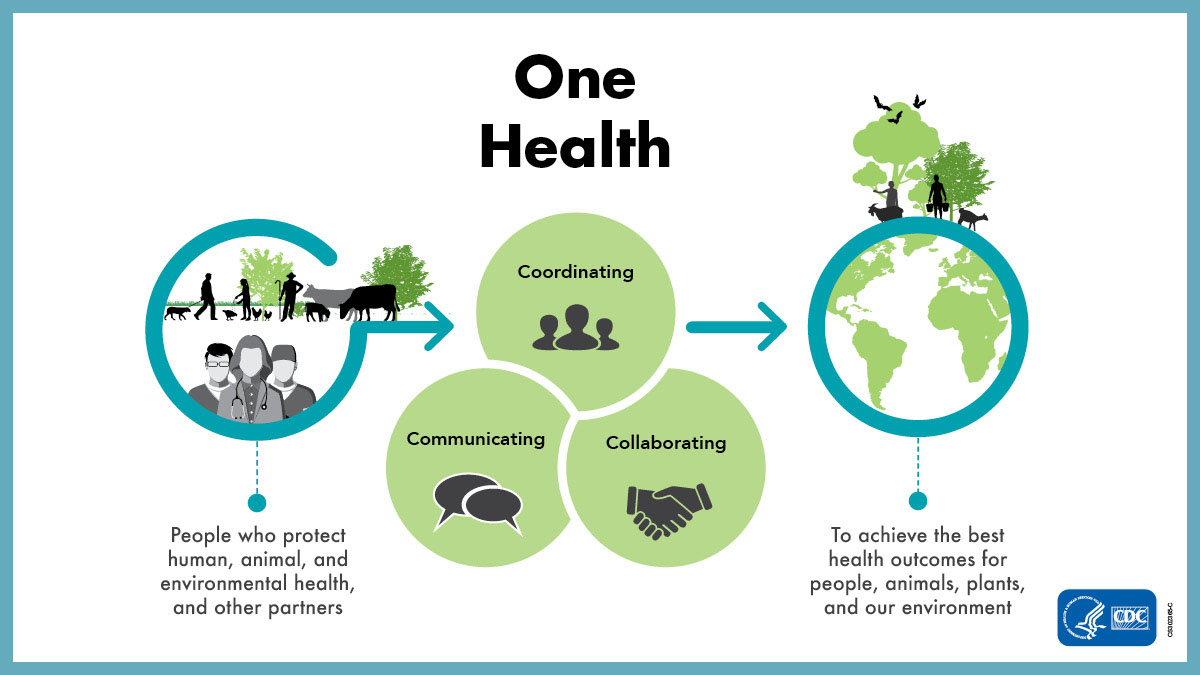
Figure 1. One Health approach.
Source:
CDC 2024 [Q9KEGHPZ] CDC. 2024. “About One Health.” One Health, November 21. https://www.cdc.gov/one-health/about/index.html.
.
3. BioCEC Guidance Sections
This BioCEC guidance is divided into several sections to illustrate the totality of this process and how to evaluate each individual segment within the process. The summarized guidance features the following sections: a Process Guide, Conceptual Exposure Models (CEMs), Key Variables, Analytical Methods, and Monitoring Programs / Resource Hub. The Case Studies section presents several case studies that examine climatic events and the implications for biological contaminants, in addition to the Hurricane Helene case study featured in Case Study: Effects of Hurricane Helene on Western North Carolina — Climatic Events and Implications for Biological Contaminants in Drinking Water of this Introduction.
3.1 Process Guide
In the Process Guide section, we present a guide for identifying BioCEC and actions to take once the presence of BioCEC has been determined. Actions to take include (1) notification and coordination with other agencies, (2) public communication, (3) response, and (4) monitoring/surveillance. Each section is supported by a narrative in a question/answer format that is aligned with available guidance on the topic. Finally, an overview of the contents of this process guide is shown in an accompanying flow chart.
3.2 Conceptual Exposure Model
A CEM is a visual representation of a BioCEC scenario that maps known and potential interactions among an environment, a pathogen, and a host to identify controls that reduce the severity of an outbreak. The CEM user guide discusses the epidemiologic triangle, which is a model used to describe the interactions among a pathogen, a host, and an environment, and how the epidemiologic triangle can be used to create a CEM. An overview of how regulators can identify contaminant sources, components of the epidemiologic triangle, cross-media transfer mechanisms, and exposure scenarios is provided. The benefits and applications of CEMs are presented, with an emphasis on the ability of a CEM to combine interdisciplinary knowledge to create a shared understanding of a BioCEC scenario. This shared understanding guides proactive and reactive regulatory responses. Specific hypothetical CEM scenarios regarding biowaste release to soil, biowaste release to potable water, vector-host interactions, and surface water contamination are presented as examples to inspire regulators for their own CEM creation. Additionally, this guidance includes a case study that examines an E. coli outbreak linked to romaine lettuce to help illustrate a real-world example of how a CEM can be applied.
3.3 Key Variables
Identifying key variables that predict increased potential of environmental transmission of pathogens is crucial to minimize or prevent the harmful human effects of BioCEC. The objective of this section is to characterize key variables that may be used to identify, evaluate, and prioritize BioCEC. In addition, resources that can be used for prioritization of BioCEC are summarized to help assess and mitigate risks of BioCEC and inform decision-making. The Key Variables section summarizes the epidemiological triangle (sometimes known as the disease triangle), which is the framework used for the discussion in the section. Key variables that fall under pathogen, environment, and host are identified and described to provide context for the evaluation of risk of BioCEC. Different prioritization schemes that are used to evaluate risk of BioCEC is reviewed, including Health Canada guidance on quantitative microbial risk assessment (QMRA), WHO’s guidance, and USEPA’s Contaminant Candidate List 5. A process description and flow chart developed by ITRC’s BioCEC team is included to summarize tools used for prioritization of BioCEC. The Case Studies section presents two case studies on the use of QMRA to evaluate the risk of BioCEC: one case study on the risk of salmonellosis from alternatively produced broiler meat and one case study that uses QMRA for direct potable water reuse treatment targets in California. Additionally, Risk of Legionella Infections from Two Shower Exposure Models in the Case Studies section includes a case study that examines the risk of Legionella infections from two shower exposure models to help illustrate the process of identifying key variables to better understand the environmental transmission of pathogens.
3.4 Analytical Methods
Reliable analysis of a pathogen in various environmental matrices and vectors requires a high degree of confidence in its identity and quantification. Microbiological detection and quantification methods are typically developed in and tested across various laboratories and groups with well-defined method limitations and appropriate quality control (QC) practices (see ITRC Environmental Molecular Diagnostics Section 10 for QC considerations). These standardized microbial methods usually represent the best technique currently available for the detection and quantification of a specific pathogen (i.e., targeted analysis). To some degree, these standardized methods can be used or modified in some way to capture new groups or subtypes of known pathogens (i.e., suspect screening). For a BioCEC, reliable and standardized analytical methods may not be readily available, especially for new pathogens that have not been previously encountered (i.e., non-target analysis). Applications of the various methods described for targeted, suspect screening, and non-targeted analysis are discussed. The Analytical Methods section describes various methods that could be used for detecting and quantifying BioCEC in various environmental matrices and vectors. Not discussed in that section is the increasing use of data analytics (for example, machine-learning approaches) for monitoring and forecasting contamination in the environment. Reliable detection and quantification of BioCEC is needed prior to applying data analytics.
3.5 Monitoring Programs / Resource Hub
The BioCEC team created an Excel spreadsheet and narrative highlighting existing monitoring programs, primarily those developed by state governments but also including several federal and international programs. The narrative includes descriptions of the format, findings, significance, and key monitoring programs and resources. The spreadsheet consists of two pages. The first page provides 59 examples of monitoring programs for BioCEC throughout the United States as well as several key international programs. While the list of monitoring programs is illustrative and is not meant to be comprehensive, a minimum of two monitoring programs was chosen to represent states in each of the US regions, as defined by the USEPA. The second page consists of a resource hub with links to websites, primarily from governmental organizations. Please note that, consistent with the overall BioCEC guidance document, the spreadsheet does not include monitoring programs or resources pertaining to indoor air quality or other controls related to the built environment.
The programs reviewed in the spreadsheet pertain to an extensive range of pathogens. These programs cover a variety of sources where pathogens have been detected, including environmental media (such as soil, water, and air), vector populations (such as mosquitoes), human and animal tissues, and healthcare data systems. The spreadsheet reflects the significant role of these monitoring programs in supporting early detection, surveillance, and response to emerging public health threats. The spreadsheet provides examples for professionals who are interested in formulating their own monitoring programs, as well as an overview for general edification regarding what sorts of monitoring programs already exist within the United States, and to a limited capacity worldwide.
3.6 Case Studies
Several case studies are featured to provide context to the discussions presented in the other sections of this guidance. The case studies are meant to help illustrate that although BioCEC are complex and situation specific, the CEM, process, variables, factors, and methods discussed in this guidance can assist in the systematic evaluation and prioritization of BioCEC. The case study of Hurricane Helene provided below is illustrative of concepts related to climate change.
Links to the other case studies in the BioCEC guidance:
- Blastomycosis outbreak
- E. coli outbreak linked to romaine lettuce
- Risk of salmonellosis from alternatively produced broiler meat
- Risk of Legionella infections from two shower exposure models
- Using QMRA for direct potable water reuse treatment targets in California
4. Case Study: Effects of Hurricane Helene on Western North Carolina — Climatic Events and Implications for Biological Contaminants in Drinking Water
4.1 Background
Extreme weather events often have adverse impacts on drinking water supplies and sanitation resources, which increases the risk that communities will be exposed to biological contaminants. This case study describes the effects of Hurricane Helene on Western North Carolina and particularly the drinking water system in Asheville, North Carolina, which was severely damaged by the storm.
Federal, state, and local agencies and organizations have faced challenges in recent years related to the increased intensity and frequency of events such as forest fires, hurricanes, and cold weather storms. Such events increase the risk of the occurrence of and exposure to a variety of biological contaminants. Tools such as the CEMs, analytical methods, and analysis of key variables provided in this BioCEC guidance provide important support to the necessary response actions.
On September 27, 2024, heavy rain and high winds associated with the remnants of Hurricane Helene, which made landfall on the Gulf Coast the day before, moved through Western North Carolina. Record-breaking rainfall totals ranged from 12 to 20 inches across Western North Carolina. The storm caused widespread flooding, damaged infrastructure, and left large swathes of the area without power, water service, or communications by cell phone and internet (Figure 2). The storm event and associated flooding caused an estimated $59 billion in damages and washed away many bridges, homes, businesses, and roadways ( NC OSBM 2024 [7JK8V8M4] NC OSBM. 2024. “Hurricane Helene Damage and Needs Assessment.” https://www.osbm.nc.gov/hurricane-helene-dna/open. ). This case study focuses on the drinking water supply for the City of Asheville, North Carolina, but it should be noted that other public systems in Western North Carolina, including Banner Elk and Spruce Pine as well as many private well owners, also suffered catastrophic damage and were forced to discontinue water service for extended periods.
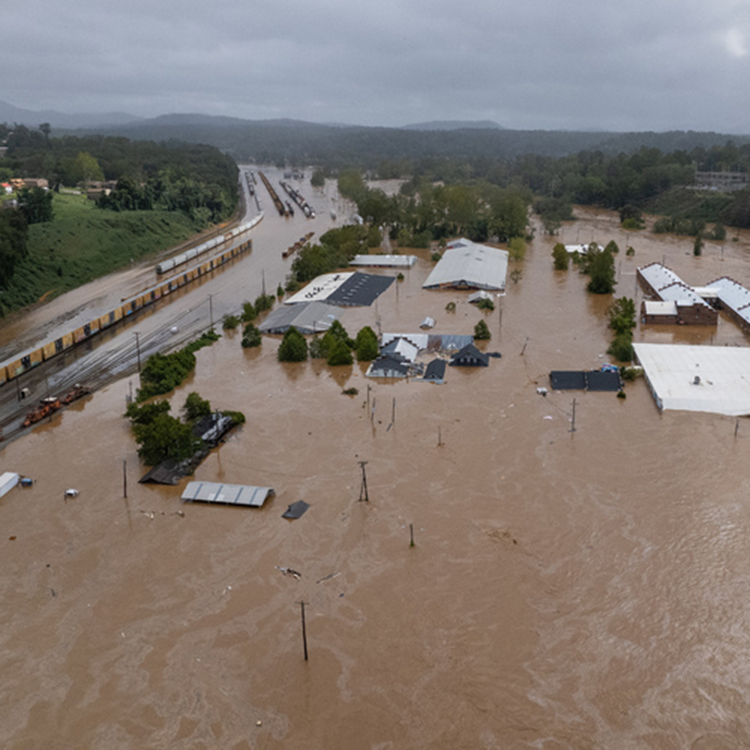
Figure 2. Aerial photo of floodwater inundating the Asheville River Arts District along Foundy Street on September 27, 2024.
Source:
Tim Reaves Photography 2024 [XGU65JNJ] Tim Reaves Photography. 2024. “Aerial Photo of Foundy Street.” Come Hell or High Water Community Memory Project, September 27. https://helenehistory.omeka.net/items/show/675.
used with permission.
In the days before the Helene storm system moved through Western North Carolina, a separate storm system had dropped substantial rain across the area. Combined, the two weather systems led to 104 people losing their lives because of floodwaters, landslides, or other fallout conditions from the storm (Hurricane Helene Storm Related Fatalities | NCDHHS). Many public services were overwhelmed by the scope of the disaster. Public water systems were heavily damaged in Asheville, North Carolina, a city of 95,000 people (based on data from census.gov), as well as other communities across the region (J. Silver, Buncombe County Health Department, interviewed by J. Mahan, March 17, 2025). Mission Hospital in Asheville was forced to use emergency generator power and lost water service as well as communications by internet, rendering electronic medical records systems inoperable. Road systems were damaged to such a degree that in the immediate aftermath of the storm the North Carolina Department of Transportation issued a statement indicating that all roads in Western North Carolina should be considered closed ( NCDOT 2024 [UNADN2PV] NCDOT. 2024. “NCDOT Urges People to Avoid Travel in Western N.C.” September 28. https://www.ncdot.gov/news/press-releases/Pages/2024/2024-09-28-avoid-traveling-western-nc-recovery-helene.aspx. ).
4.2 Damage to Water Treatment Infrastructure
The effects of Helene required a coordinated response by aid agencies to assist Western North Carolina with recovery. Relevant agencies included federal (USEPA, the Federal Emergency Management Agency, the US Army Corps of Engineers), state (North Carolina Department of Environmental Quality, North Carolina Department of Health and Human Services), and local (Buncombe County Health Department, Asheville Water Resources Department [WRD]). The municipal water system in Asheville is managed by the City of Asheville’s WRD. The WRD system consists of three drinking water plants (North Fork, William DeBruhl, and Mills River) and includes more than 1,700 miles of water distribution lines. The North Fork plant located 15 miles from downtown Asheville is the largest of the three treatment plants and supplies most of the water to the Asheville area. The most immediate challenge to the Asheville WRD from Helene was that the North Fork water treatment plant and associated distribution system were heavily damaged. Another significant challenge faced by Asheville WRD was that sections of the 36‑inch water main that provides water from the North Fork plant to Asheville had been washed away by floodwaters.
4.3 Water Quality and BioCEC Concerns
Landslides, fallen trees, and stormwater runoff led to turbidity levels in the North Fork Reservoir that the plant was not designed to handle. Historically, water obtained from the North Fork Reservoir has been of excellent clarity with a Nephelometric Turbidity Unit (NTU) of 1.0; however, after the storm, turbidity was as high as 80 NTUs. The damages to infrastructure posed an increased risk of exposure to waterborne and related pathogens to Asheville and Western North Carolina residents.
The Helene storm event fits into the pattern of tropical storms detailed by researchers Victoria Lynch and Jeffrey Shaman in an article from PLOS Water. The authors report that these storms lead to an increase in the occurrence of hospitalizations due to waterborne infectious disease. Specifically, the incidence of Legionnaires’ disease, E. coli, and cryptosporidiosis incidence increased after intense rainfall events ( Lynch and Shaman 2023 [8Z2ZQJEF] Lynch, Victoria D., and Jeffrey Shaman. 2023. “Waterborne Infectious Diseases Associated with Exposure to Tropical Cyclonic Storms, United States, 1996–2018.” Emerging Infectious Diseases 29 (8). https://doi.org/10.3201/eid2908.221906. Lynch and Shaman 2024 [2GBY62VL] Lynch, Victoria D., and Jeffrey Shaman. 2024. “Hydrometeorology and Geography Affect Hospitalizations for Waterborne Infectious Diseases in the United States: A Retrospective Analysis.” PLOS Water 3 (8): e0000206. https://doi.org/10.1371/journal.pwat.0000206. ). The increased illness is attributed to factors such as sewage system overflows or bypasses and mobilization of pathogens from soil and sediment by overland water flow. Pathogens associated with waterborne illness include the following:
- Biofilm-forming bacteria — Nontuberculous mycobacteria, Pseudomonas, and Legionella
- Bacterial — Salmonella, Campylobacter, Shigella, and E. coli
- Parasitic — Cryptosporidium, Giardia, species of amoeba and protozoa
- Viral — Norovirus
4.4 Post-storm Mitigation and Recovery
The aftermath of Hurricane Helene presented a situation where there was potential for widespread waterborne illness, but a series of steps taken by the WRD and other organizations helped to avoid such an outcome. Immediate efforts to avoid and mitigate the risk of waterborne illness in Asheville included the following:
- A boil water notice was issued for the Asheville municipal water system and for water obtained from private wells inundated by floodwater.
- Bottled and bulk potable water was made available to residents through the efforts of public and private storm relief groups.
- Public health officials provided guidance to establishments (restaurants, hotels, childcare centers, etc.) on how to operate safely during a boil water advisory or notice.
- Mobile sanitation centers were established to provide opportunities for bathing, brushing teeth, etc.
- A mobile water treatment system was constructed in nearby Swannanoa, North Carolina. A temporary water intake was placed in the adjacent Swannanoa River. As there were no regulatory mechanisms to permit this type of system in real time, a system design with a professional engineering certification was accepted and put on file by the local office of the North Carolina Department of Environmental Quality — Public Water Supply Section.
- Testing of public and private water supplies started during the immediate storm recovery period.
- Mission Hospital instituted a system whereby large quantities of potable water were transported from outside the area, offloaded into tanks set up outside the hospital, and pumped into the facility’s water system. Many Asheville businesses instituted similar systems so that they could reopen.
After the Helene system moved through on September 27, most of Asheville did not have water service at all (Figure 3). The boil water notice was extended and remained in effect until November 18 when repairs and testing of the water system allowed for it to be lifted. A portion of the southern WRD service area remained in service as the Mills River plant did not suffer heavy damage. Drinking water was in short supply until truck deliveries of bottled water could catch up to the needs. Toilets went unflushed, or residents carried water in buckets from nearby streams to flush them. The WRD began feeding water into the distribution system as soon as portions of the system were back online. There was agreement among officials that any water provided through the distribution system was better than none. Therefore, in mid-October the system was pressurized in stages, and residents were able to obtain water from their household taps — much of the water was untreated and/or muddy and not suitable for drinking or cleaning.
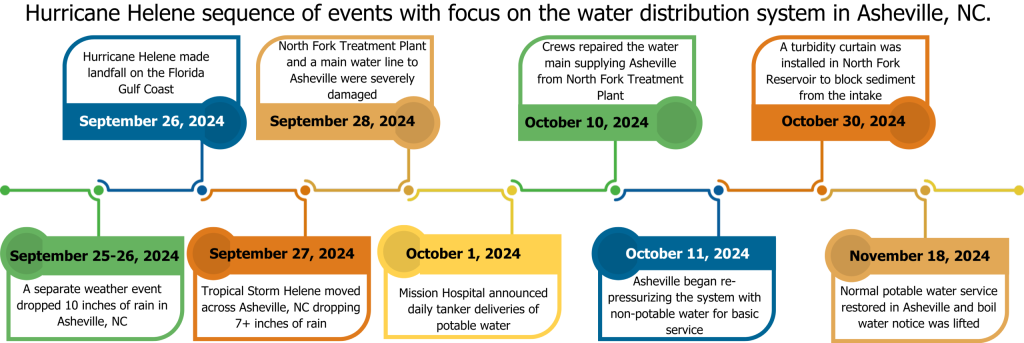
Figure 3. Timeline of Hurricane Helene and impacts to the Asheville, North Carolina, water distribution system.
As the WRD re-pressurized the distribution system in mid-October they were not able to use the standard treatment processes. To achieve a basic level of disinfection, chlorine was used at a concentration of 8 milligrams per liter (mg/L) for water as it left the North Fork plant. This resulted in an average concentration of 2 to 4 mg/L across the distribution system (J. Kohn, North Carolina Department of Environmental Quality, interviewed by J. Mahan, December 2, 2024). Residents were able to use the water for bathing, flushing toilets, and washing dishes.
Asheville WRD tested water from the reservoir and throughout the distribution system as service was slowly restored. Concerns for water quality included the potential presence of harmful pathogens, elevated levels of metals, and the potential for elevated levels of disinfection byproducts. WRD conducted testing for lead, copper, aluminum, iron, chlorine, manganese, total coliform, and E. coli, as well as turbidity. On November 15, the city announced that water treatment infrastructure, although not fully restored, was repaired to such a degree that sufficient water to service the Asheville system (~25 million gallons daily) was available. Final testing for E. coli, coliform, and chlorine residuals was conducted over the next several days. On November 18, normal water service returned 52 days after the storm.
4.5 Summary
Actions taken by water authorities and public health officials included dissemination of educational information on the safe use of public water and private well water affected by the storms; construction of temporary sanitation centers, which provided restrooms, drinking water, water for personal hygiene, and water for basic kitchen tasks; and testing of public and private water supplies for waterborne pathogens. While there were individual reports of gastrointestinal illness, the preventive actions taken to improve sanitary conditions were successful in helping to avoid widespread outbreaks of waterborne illness (Aftermath of Helene making WNC survivors sick | NC Health News, Hurricane Helene Update: Death Toll and Unaccounted For | Regional/National Headlines | local3news.com).
Given the scale of the storm and its aftereffects, this was a victory. The fact that an inland city 400 miles from the coast where Hurricane Helene made landfall was impacted by the storm so dramatically and had to take these kinds of actions to recover from its effects is an indication of how climatic events can challenge the water utility and public health infrastructure.
Information in this guidance document is meant to support efforts to respond to and mitigate the kinds of hazards and risks posed by weather events similar to this one in Western North Carolina. The event in this case study focuses on the potential for waterborne illness; however, the guidance document also addresses potential risks associated with other media including soil, waste material, and air. Additional information and resources related to Hurricane Helene recovery in North Carolina is available at the North Carolina Department of Health and Human Services website.