In this section, we present a process guide for identifying and addressing human health-relevant biological contaminants of emerging concern (BioCEC). For a detailed discussion of the scope of what is considered a BioCEC, please see the Introduction section. We begin this section by providing a discussion of the first steps of a BioCEC event: identifying and confirming the presence of BioCEC. Next, we discuss potential actions to take, including notification/coordination with agencies, public communication, and response. Each discussion of potential actions begins with key questions to consider for the category of action. These are followed by a brief narrative discussing an overview of the key questions. An overview of the process described below is outlined in Figure 1.
1. Identification of BioCEC
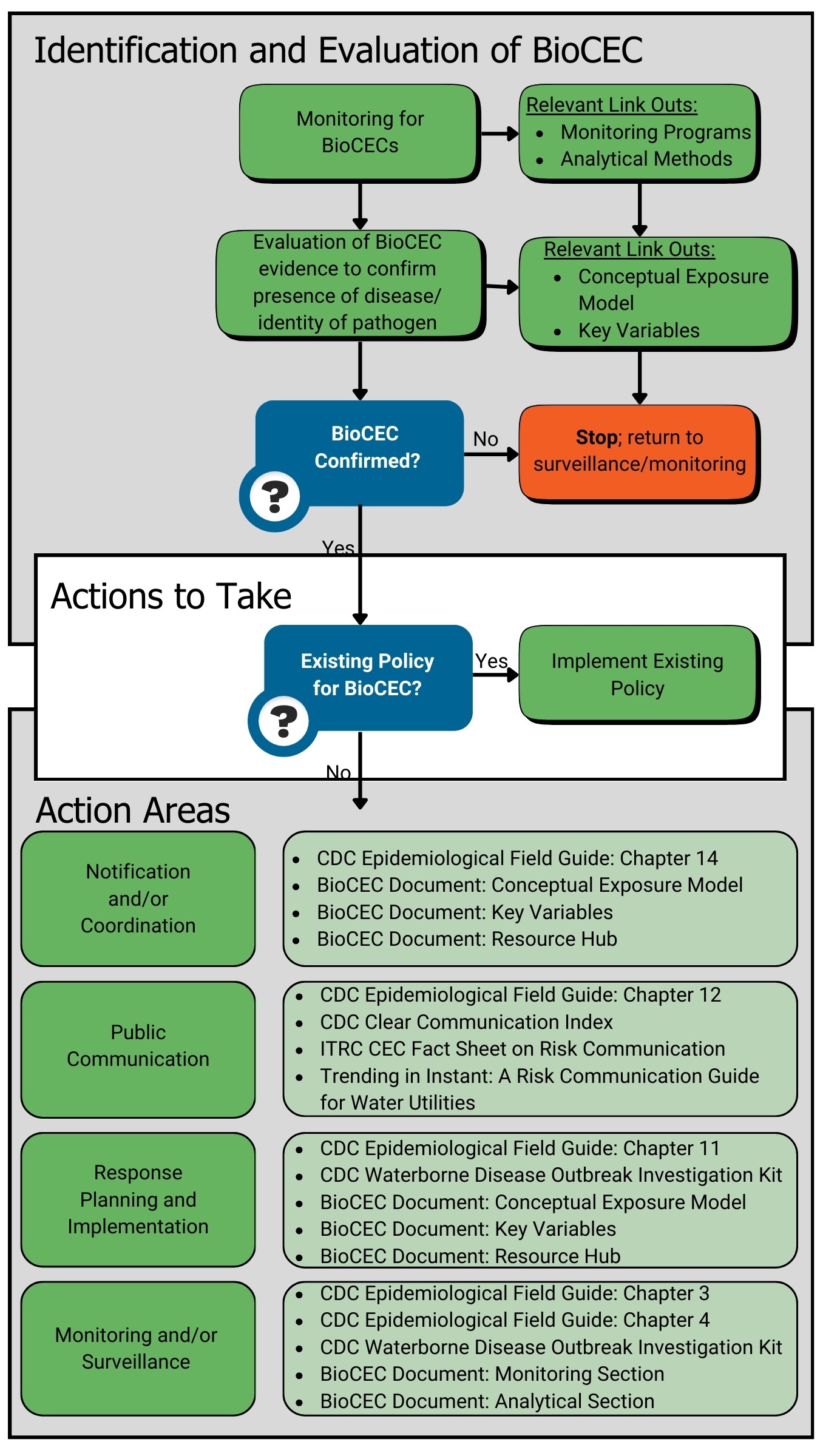
Figure 1. Process Guide components, flow, and key references.
The identification of BioCEC ultimately stems from monitoring efforts. These range from state and local agencies implementing their own programs to monitor for specific BioCEC of interest in their areas, to monitoring networks that have been implemented by other states or federal agencies such as the Centers for Disease Control (CDC) (e.g., https://www.cdc.gov/emerging-infections-program/php/about/index.html). Development of analytical methods to effectively identify BioCEC in certified and commercial laboratories is also an important factor as our understanding of how BioCEC distribute and interact with various environmental compartments and media is refined. Methods for identifying BioCEC are discussed in greater detail in the Monitoring Programs and Analytical Methods sections of this document. It is important to note that in addition to the identification of a BioCEC, the determination of a high risk of occurrence of a BioCEC may also spur action. For example, in the case study presented in the Introduction, the high risk of BioCEC occurring from damage to water infrastructure caused by Hurricane Helene motivated a response instead of the identification of the BioCEC themselves.
2. Actions to Take
Once the presence (or the unacceptably high risk) of a BioCEC has been confirmed in a jurisdiction, several potential actions can be taken. A subset of these actions include (1) notification and coordination with state, local and federal entities; (2) communication with the public; (3) BioCEC response; and (4) continued monitoring. Note that the order of actions presented above is not prescriptive, and the actual order of actions taken will depend on the individual situation. In addition, the actions presented here are general categories that are interconnected and likely conducted in coordination with each other. The concepts discussed here are illustrated by a case study of an outbreak of blastomycosis, which is presented in the Case Studies.
2.1 Notification and Coordination
Other health and environmental organizations and agencies should be notified and coordinated with to plan and carry out a response to a BioCEC. Due to the possibility that a BioCEC outbreak may cross existing program boundaries, new partnerships across organizations and agencies may be warranted.
2.1.1 Key Questions
- Is the potential BioCEC outbreak multijurisdictional?
- What local, state, and federal bodies should be contacted to plan a coordinated response?
- How should public communications be coordinated across jurisdictions?
- Have existing partnerships been established between relevant organizations and agencies, or do new lines of communication need to be established between points of contact?
- In what media can the suspected BioCEC be found in the environment?
- Through what media does transmission of the BioCEC occur?
- Does comprehensive guidance for responding to this type of BioCEC already exist?
- If guidance does not currently exist, are there resources available to help create a response protocol?
2.1.2 Discussion
Efficient and effective coordination with relevant agencies is critical for successfully navigating BioCEC outbreaks and contamination events (hereafter simply BioCEC events). The jurisdictional extent of the BioCEC event is a key piece of information that will guide coordination moving forward with the response to the BioCEC. This can be influenced by the category of the exposure medium (e.g., food vs. water), the medium in the environment in which the BioCEC can be found, and the identified spatial extent of the BioCEC.
The majority of BioCEC events are identified and investigated at the local and state level (see the examples in the Case Studies), but subsequent investigation may lead to the involvement of several other agencies at different levels of regulatory authority. For example, a BioCEC linked to illness in a single restaurant may be under the jurisdiction of the local or state health authority. A BioCEC spread by contaminated water onto fresh produce may span state lines, resulting in a multijurisdictional situation. A real-world example of such a situation is provided in a case study of a BioCEC event involving contamination of romaine lettuce (see Case Study: Blastomycosis Outbreak). Identifying the key variables (see the Key Variables) and an appropriate conceptual exposure model (CEM) (see the Conceptual Exposure Model) of the BioCEC can help identify relevant agencies.
Once the jurisdictional extent of a BioCEC event has been identified, it is important to clearly identify roles for investigating, responding to, and communicating about the BioCEC. Investigations should be coordinated at the level where relevant investigation steps can be most effectively implemented. This requires identifying the agency with sufficient resources, expertise, and legal authority to collect, organize, analyze, and disseminate information. When these characteristics are not shared by a single agency, defining clear roles for organizations is critical. A system such as the incident command structure, a framework commonly used by emergency response organizations to manage incidents ( FEMA 2024 [CIJMW3KI] FEMA. 2024. “NIMS Components — Guidance and Tools | FEMA.Gov.” August 5. https://www.fema.gov/emergency-managers/nims/components. ) can be helpful in this coordination. Limited points of contact and clear communication trees should be identified between agencies. BioCEC events may cross over existing program boundaries and require new partnerships to be established with various agencies and organizations. Any new partnerships should be identified and established as soon as possible to reduce any delay in communication and coordination.
The ultimate success of coordination should be measured by the ability to identify the pathogenic agent, mount a prompt public health intervention, and effectively control the outbreak. Much of the above information was summarized from the CDC Field Epidemiology Manual: Chapter 14 ( Rasmussen and Goodman 2019 [QS3IJ6KF] Rasmussen, Sonja A., and Richard A. Goodman, eds. 2019. The CDC Field Epidemiology Manual. Oxford University Press. https://www.cdc.gov/field-epi-manual/site.html. ); please see this reference for more details on coordination and notification between agencies. A list of federal and international agencies frequently involved in BioCEC events can be found in the Monitoring Programs. For coordination and notification at the state level, please refer to information available on individual state health agency websites.
2.2 Public Communication
Effectively communicating with the public is a crucial piece of planning and implementing responses to BioCEC.
2.2.1 Key Questions
- What role should my agency play in public communication?
- Is there a public communication timeline? Should communication be delayed or expedited?
- How much technical detail should be included in communication?
- What are the pitfalls of public communication?
2.2.2 Discussion
Public communication encompasses a variety of activities, such as press releases, internet social media posts, news conferences, and fact sheets. Although different in form, medium, and content, each ultimately aims to communicate information about the potential for public health risk and should be timely, clear, accurate, and concise.
A primary goal of public communication about BioCEC is to help people understand the risks posed by pathogenic agents and to provide enough detail so they can avoid adverse outcomes. One challenge is simplifying complex technical information into the key components that are both accurate and interpretable by the intended audience. Another important challenge, however, is that risk is perceived differently by different members of the public. A detailed discussion of risk perception is beyond the scope of this guidance (see Rasmussen and Goodman 2019 [QS3IJ6KF] Rasmussen, Sonja A., and Richard A. Goodman, eds. 2019. The CDC Field Epidemiology Manual. Oxford University Press. https://www.cdc.gov/field-epi-manual/site.html. Table 12; Lohiniva et al. 2022 [8VXT7L7A] Lohiniva, Anna-Leena, Annika Pensola, Suvi Hyökki, Jonas Sivelä, and Tuukka Tammi. 2022. “COVID-19 Risk Perception Framework of the Public: An Infodemic Tool for Future Pandemics and Epidemics.” BMC Public Health 22 (1): 2124. https://doi.org/10.1186/s12889-022-14563-1. ), but in general, a person will change their behavior in response to a perceived risk if they feel that the risk posed is unacceptable. While this judgment involves several interacting factors ( Rasmussen and Goodman 2019 [QS3IJ6KF] Rasmussen, Sonja A., and Richard A. Goodman, eds. 2019. The CDC Field Epidemiology Manual. Oxford University Press. https://www.cdc.gov/field-epi-manual/site.html. , Table 12.1), people are more willing to accept a risk (that is, not change their behavior in the face of a risk) the more familiar they feel with the situation. The converse is also true: people are generally less willing to accept risks if they feel less familiar with a situation. Another key challenge is to convince people to accept the information they are given. People are generally more likely to accept an information source if that source is perceived to be competent, empathetic, and honest. Finally, a goal of communication is to convey information that resonates with people in a way that helps them understand it and is relevant to their situation.
A more detailed discussion of risk communication can be found in the Interstate Technology and Regulatory Council (ITRC) Contaminants of Emerging Concern (CEC) Fact Sheet on Risk Communication ( ITRC 2023 [GJ66ZCMH] ITRC. 2023. “CEC Risk Perception and Communication Fact Sheet.” Interstate Technology & Regulatory Council. https://cec-1.itrcweb.org/cec-risk-perception-and-communication-fact-sheet/#Risk_Introduction. ).
It is important that the roles and responsibilities for public communication about BioCEC are determined as soon as possible in the BioCEC response process and that those roles are clear and consistent. If possible, public communication roles should be determined prior to the emergence of a BioCEC so that agency roles are clear from the beginning. Although there is no timeline for public communication of BioCEC, effort should be made at the beginning of the response process (and refreshed throughout) to gain situational awareness to improve communication throughout the response. Such activities could include the following:
- Identifying target audiences and key demographics that may be affected by a BioCEC.
- Identifying how information is consumed within different communities (geographical, cultural, religious).
- Identifying key behaviors influencing risk and developing messaging to address these behaviors.
- Identifying potential barriers to communicating technical information (i.e., language) that need to be overcome.
- Identifying potential barriers (i.e., cultural) to responding to BioCEC.
- Building relationships and communication with key partners, such as organizations, leaders, and influencers.
- Gauging audience perceptions of how communication is received.
It is critical that public communication practices build trust between the public and health authorities over the timeline of the BioCEC response process. This is complicated by uncertainty on the part of the authorities about the current status of the BioCEC event and its trajectory. As part of maintaining and building trust with the public, it is important that this uncertainty is communicated clearly.
Finally, when communicating with the public, common pitfalls to be avoided include the following:
- Not being honest OR not being perceived as honest through poor communication practices
- Not communicating empathy
- Inconsistent messaging
- Unclear messaging
More detailed information on communication during a BioCEC event can be found in the CDC Field Epidemiology Manual: Chapter 12 ( Rasmussen and Goodman 2019 [QS3IJ6KF] Rasmussen, Sonja A., and Richard A. Goodman, eds. 2019. The CDC Field Epidemiology Manual. Oxford University Press. https://www.cdc.gov/field-epi-manual/site.html. ). A detailed guide to developing written public communication products for communicating public health information is provided by the CDC Communication Index ( CDC 2019 [N7ZM2QDF] CDC. 2019. “CDC Clear Communication Index: A Tool for Developing and Assessing CDC Public Communication Products—User Guide.” https://www.cdc.gov/ccindex/pdf/clear-communication-user-guide.pdf. ). In addition to the ITRC CEC Risk Communication Fact Sheet ( ITRC 2023 [GJ66ZCMH] ITRC. 2023. “CEC Risk Perception and Communication Fact Sheet.” Interstate Technology & Regulatory Council. https://cec-1.itrcweb.org/cec-risk-perception-and-communication-fact-sheet/#Risk_Introduction. ) noted above, detailed guidance for risk communication for public water system providers is provided by the American Water Works Association ( AWWA 2019 [EQIJL6M7] AWWA. 2019. “Trending in an Instant: A Risk Communication Guide for Water Utilities.” https://www.awwa.org/wp-content/uploads/Trending-In-An-Instant-Risk-Comm-Guide.pdf. ).
2.3 Response Planning and Implementation
A response is the technical plan to address the BioCEC and its effects. Implementing an appropriate response is essential to mitigate risk to public health.
2.3.1 Key Questions
- What kind of response is warranted for the BioCEC? Is the response based on established knowledge?
- Are there existing CEMs that could apply or serve as a basis for developing a CEM for the BioCEC? (See the Conceptual Exposure Model)?
- What is the severity and frequency of the risk to public health due to the BioCEC?
- What basic biological and/or epidemiological information is needed to formulate a proper response? If information is missing, are proxies available?
- Will the exposed population build immunity, and if so, over what time frame?
- Are vaccines or prophylactic therapies available?
- Are there agencies in addition to those identified above that are needed to physically respond to the BioCEC?
- What elements of the response will differ between the short-term (e.g., emergency) and long-term phases of a BioCEC event?
- What will be the roles of the various coordinating agencies in the response?
- Will there be a role for the public in the response?
- How will the response change with evolving information?
- How will the BioCEC response be funded?
- Are there regulatory criteria that trigger environmental responses?
2.3.2 Discussion
Implementing a comprehensive response plan is essential for mitigating the public health risk associated with exposure to BioCEC. Public health responses should be scientifically driven by established facts and data, knowledge from previous investigations, and current investigation findings. For detailed information on establishing the scientific basis of a BioCEC event, see discussions in the Conceptual Exposure Model, Key Variables, and Analytical Methods sections. Adapting components of the response may be necessary as information on the BioCEC and the outbreak evolves. Responses to emerging contaminants benefit greatly from open, two-way communication between governmental agencies and the public. Especially in cases when knowledge on the BioCEC is limited and information on how to respond to an outbreak is continually changing, communication with the public is essential to retain public trust in responsible agencies.
There are many factors to consider when planning a response, including the type of BioCEC driving the event, the sources of the BioCEC, and modes through which the BioCEC can spread. Additionally, the potential severity of the problems caused by the BioCEC will inform agencies on how quickly practices should be implemented. Please refer to the Key Variables and Conceptual Exposure Model sections for a more detailed discussion of pathogen characteristics and pathogen–host–environment interactions. These characteristics are important to understand in order to effectively plan and execute a response. An effective response to a BioCEC would likely involve an approach with multiple components including a robust monitoring program, development of mitigation strategies, open communication with stakeholders, and the implementation of regulatory actions designed to reduce exposure and transmission. It is important to determine whether an existing response plan is available with local governmental agencies or whether a plan needs to be developed. Similarly, if a BioCEC is relatively common in another part of the world but is newly emerging in the United States, there may be some existing guidance for developing a high-level response. Alternatively, if the BioCEC is closely related to a BioCEC that has been seen in the past (e.g., a newly emergent variant from a family of viruses previously linked to an outbreak), it is possible that existing guidance and resources used for that previous BioCEC can be used as a starting point for developing a response to the pathogen.
Please refer to the Monitoring Programs / Resource Hub for links to federal programs and lists of outbreaks, as well as a World Health Organization list of vector-borne diseases. For a detailed discussion of this topic, please see the CDC Waterborne Disease Outbreak Investigation Toolkit ( CDC 2024 [SY2C9T32] CDC. 2024. “Waterborne Disease Outbreak Investigation Toolkit.” Water, Sanitation, and Hygiene (WASH)-Related Emergencies and Outbreaks, November 7. https://www.cdc.gov/water-emergency/php/toolkit/index.html. ), and the CDC Field Epidemiology Manual: Chapter 11 ( Rasmussen and Goodman 2019 [QS3IJ6KF] Rasmussen, Sonja A., and Richard A. Goodman, eds. 2019. The CDC Field Epidemiology Manual. Oxford University Press. https://www.cdc.gov/field-epi-manual/site.html. ).
2.4 Continued Monitoring
During and after a BioCEC response, monitoring can be carried out to provide information about the extent (geographic, population impacted) and severity (health impacts, including death) of the identified BioCEC, as well as to evaluate the extent to which the public health response in addressing the BioCEC has been successful. Please refer to the Monitoring Programs spreadsheet for examples of existing monitoring programs.
2.4.1 Key Questions
- Can the BioCEC be monitored directly or indirectly?
- How can intervention(s) be assessed, both in the short and long term?
- What monitoring resources are available? See the Monitoring Programs.
- Are there state, federal, or commercial labs with expertise in monitoring the BioCEC?
- What type of analytical methods are available for monitoring? See the Analytical Methods.
- Is there any potential for citizen involvement (e.g., a system to send observations, phone applications for data collection)?
2.4.2 Discussion
When considering a continued monitoring plan, an agency may consider whether it is most appropriate to conduct the monitoring on their own, or to partner with a local, state, and/or federal partner. In addition, different monitoring programs may be needed at different stages of a BioCEC event. For example, the type and extent of monitoring used for general BioCEC may be different from the type of monitoring needed once a potential BioCEC is identified.
More information on this topic can be found in the Monitoring Programs of this document. Detailed discussions of field data collection and monitoring programs can be found in the CDC Field Epidemiology Manual (Chapters 4–5) ( Rasmussen and Goodman 2019 [QS3IJ6KF] Rasmussen, Sonja A., and Richard A. Goodman, eds. 2019. The CDC Field Epidemiology Manual. Oxford University Press. https://www.cdc.gov/field-epi-manual/site.html. ) and in the CDC Waterborne Disease Outbreak Investigation Toolkit ( CDC 2024 [SY2C9T32] CDC. 2024. “Waterborne Disease Outbreak Investigation Toolkit.” Water, Sanitation, and Hygiene (WASH)-Related Emergencies and Outbreaks, November 7. https://www.cdc.gov/water-emergency/php/toolkit/index.html. ).